
When it comes to chainsaw performance, most people focus on the engine or the chain. But there’s one critical component that often gets overlooked — the guide bar.
In reality, it plays a major role in cutting accuracy, safety, and the overall lifespan of your chainsaw.
If you’re working in forestry, agriculture, landscaping, or heavy-duty cutting, understanding the guidebar is not optional — it’s essential. This guide will walk you through everything you need to know before choosing the right one.
What Is a Guide Bar?
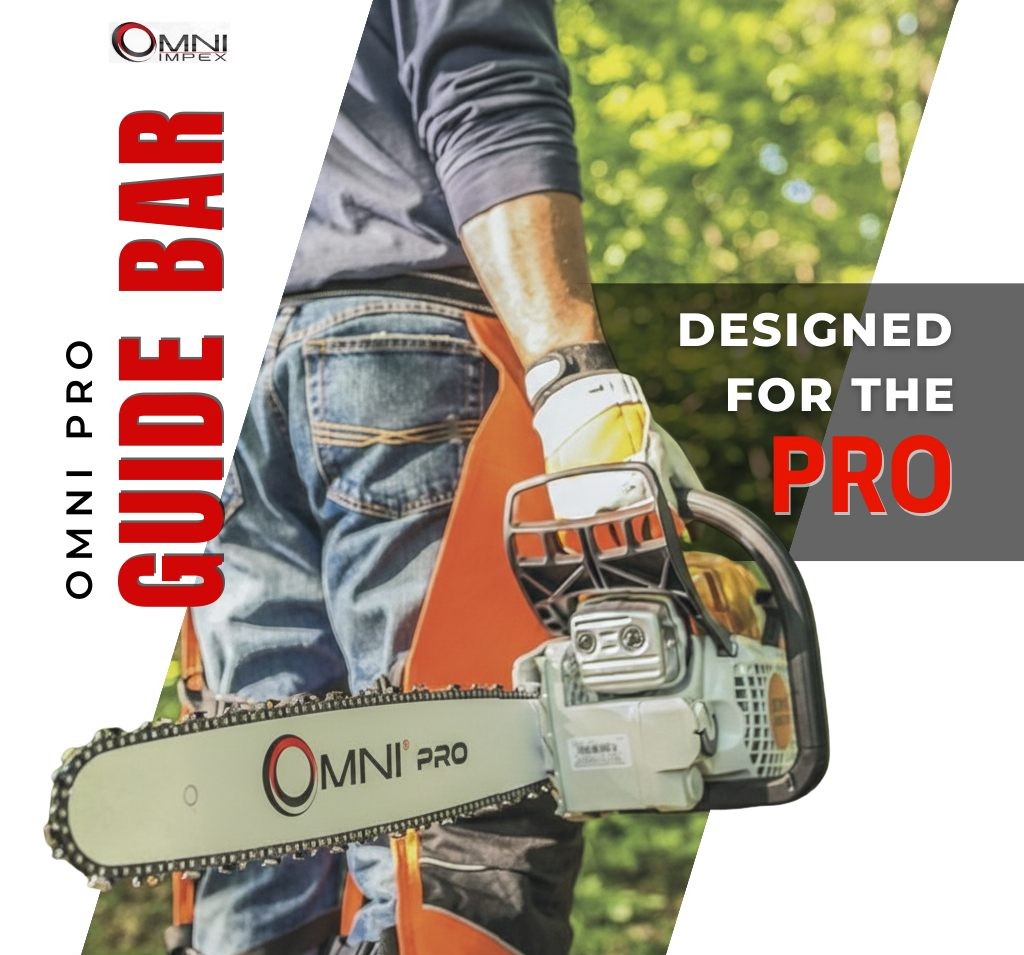
A guide bar is the long, flat metal blade that extends from the chainsaw body and guides the cutting chain during operation. The chain runs along the edges of the guidebar, allowing controlled and precise cutting.
Think of the guidebar as the backbone of your chainsaw system. Without a properly selected guidebar, even the best chain and engine won’t perform efficiently.
Why the Guide Bar Matters More Than You Think
The guide bar directly affects:
- Cutting precision
- Balance and control
- Safety during operation
- Chain life
- Overall efficiency
A poorly matched or low-quality guidebar can lead to uneven cuts, excessive vibration, faster chain wear, and increased kickback risk.
1. Guide Bar Length: Bigger Isn’t Always Better
One of the first things to consider is guide bar length.
Longer guidebars allow you to cut thicker logs, but they also require more power and experience to handle safely. Shorter bars offer better control and are ideal for lighter tasks.
Choosing the right length depends on:
- The type of work you do
- Chainsaw power
- Operator skill level
Always match the guidebar length to your chainsaw’s capacity.
2. Guide Bar Gauge and Chain Compatibility
The gauge refers to the thickness of the guidebar groove. This must match the chain perfectly.
If the gauge is incorrect:
- The chain may wobble
- Cutting efficiency drops
- Wear increases rapidly
This is a common mistake users make — and it’s one of the easiest ways to damage both the chain and the guidebar.
3. Nose Type: Sprocket vs Solid
Guide bars generally come with two nose types:
- Sprocket Nose – Reduces friction, improves cutting speed, ideal for professional and continuous use
- Solid Nose – More durable for tough environments, less maintenance, preferred for rugged tasks
Your working conditions should determine the choice.
4. Material and Build Quality
Not all guide bars are built the same.
High-quality ones are made using hardened steel and precision manufacturing to ensure:
- Better heat resistance
- Reduced bending
- Longer service life
Cheap guidebars may cost less initially, but they often wear out faster and compromise safety.
5. Balance and Weight Distribution
A well-designed guide bar improves balance and reduces operator fatigue. Poor weight distribution can cause strain on arms and shoulders, especially during long working hours.
Professionals rely on guidebars that provide stability without adding unnecessary weight.
6. Safety and Kickback Control
Kickback is one of the most dangerous risks in chainsaw operation. A properly designed guide bar helps minimize this risk by:
- Maintaining chain stability
- Reducing sudden jerks
- Offering better cutting control
Safety isn’t just about protective gear — it starts with the right components.
7. When Should You Replace a Guide Bar?
You should consider replacing your guidebar if you notice:
- Uneven chain wear
- Bent or damaged rails
- Excessive vibration
- Reduced cutting accuracy
Ignoring these signs can affect both performance and safety.
Choose Smart, Work Better
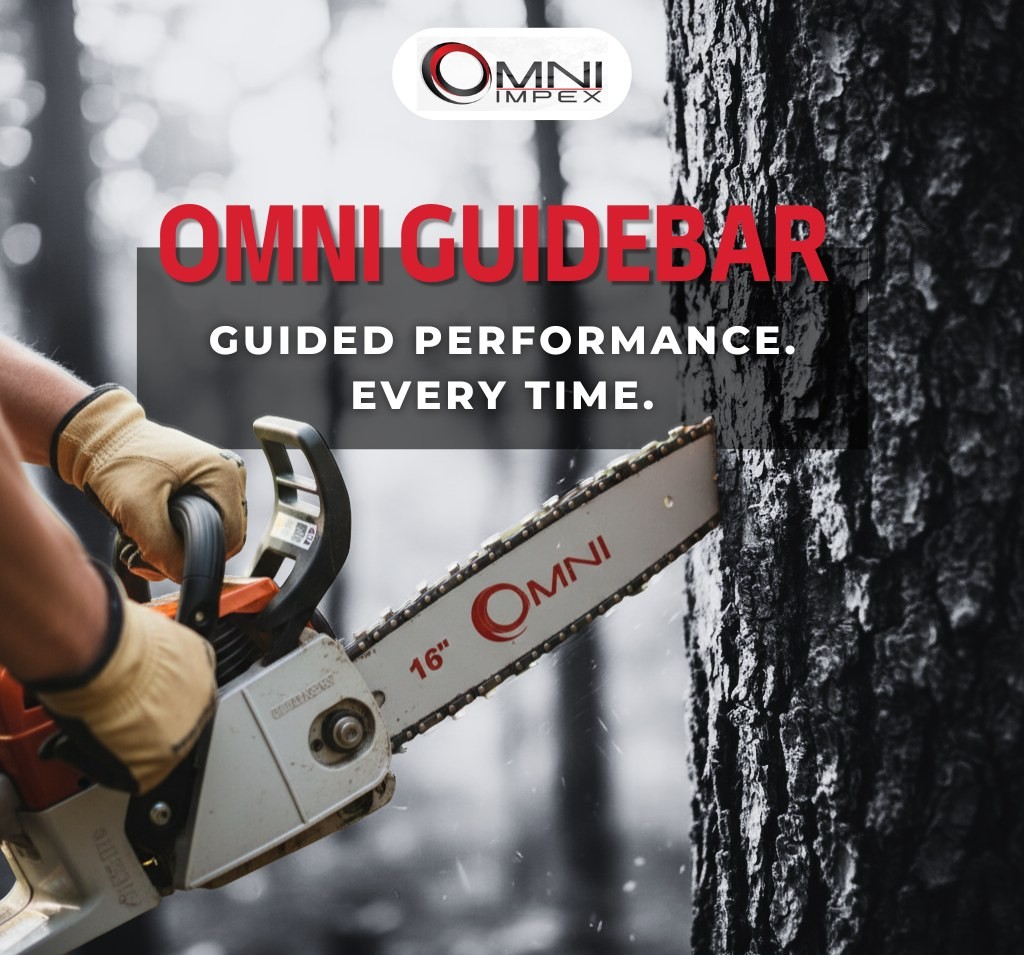
Choosing the right guide bar isn’t just about compatibility — it’s about performance, safety, and efficiency. Whether you’re a professional or a serious user, investing in a high-quality guidebar makes a noticeable difference in results and tool longevity.
For those seeking durability, precision, and consistent performance across demanding applications, OmniPro and Omni Guide Bars are engineered to deliver reliable results you can trust — cut after cut.
For Professional & Industrial Performance – Omni Impex
At Omni Impex, we understand that professionals need tools that deliver precision, durability, and consistency in demanding environments. That’s why OmniPro and Omni Guide Bars are engineered to meet professional standards across forestry, agriculture, and landscaping applications.
Upgrade your cutting performance.